
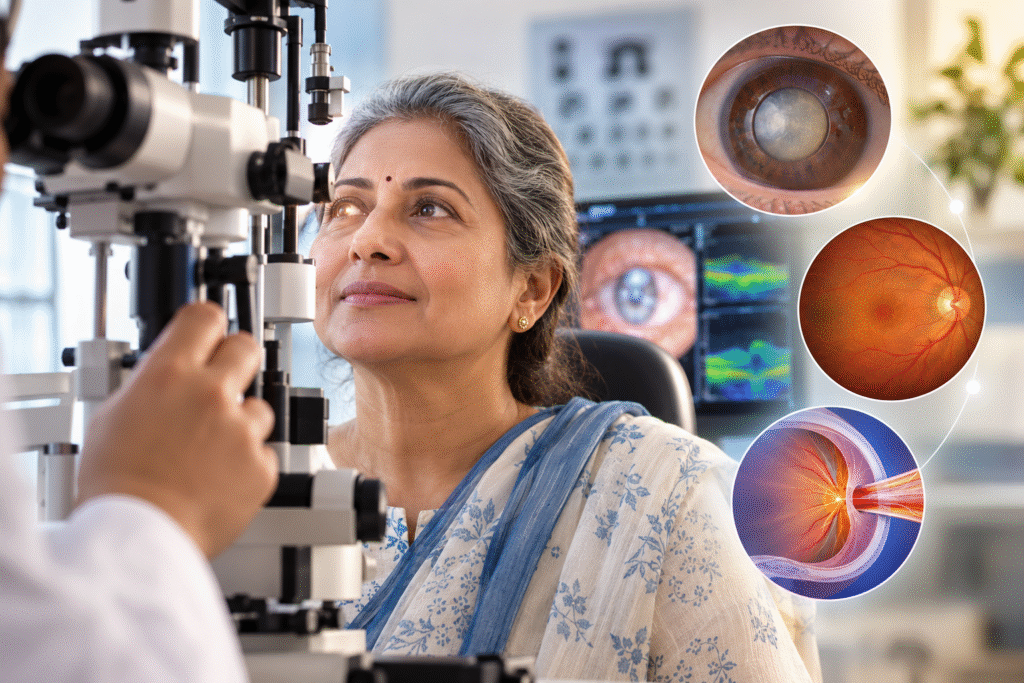
Noticing that your vision is less sharp than it used to be can be unsettling. Perhaps road signs look hazy, reading small print has become difficult or lights seem unusually bright at night. These changes are common reasons to arrange an eye examination, particularly after the age of 40. But blurred vision does not always mean cataract, and not every eye problem requires surgery.
For people searching for an eye doctor in Kurukshetra, understanding the possible causes can make the first consultation more useful. An ophthalmologist can examine the eye and recommend treatment according to the cause, your symptoms and your overall eye health.
Why does vision sometimes change after 40?
Around middle age, the eye’s natural lens gradually becomes less flexible. This can make near tasks such as reading a phone or medicine label harder, a normal age-related change called presbyopia. Blurry sight may also be caused by changes in the glasses prescription, dry eye, cataract, or conditions affecting the retina or optic nerve. Some conditions produce gradual symptoms; others require urgent evaluation.
Age alone cannot identify the cause. A complete eye examination may include a vision test, refraction, examination of the front and back of the eye, and eye-pressure assessment where indicated.
1. Cataract: when the natural lens becomes cloudy
A cataract forms when the normally clear lens inside the eye becomes cloudy. Vision may become hazy or dim, headlights may cause glare, colours may look faded and night driving may become uncomfortable. Cataracts often develop gradually, although the rate varies between people.
A person looking for a cataract hospital in Kurukshetra should understand that treatment timing is based on functional difficulty and an eye examination, not age alone. If the cataract is mild, an updated glasses prescription or monitoring may be appropriate. When cataracts interfere with important activities, an ophthalmologist may discuss surgery to remove the cloudy lens and implant an artificial intraocular lens (IOL). As with any operation, benefits, risks, lens choices and follow-up need discussion.
Read more: https://sainieyecarecentre.com/cataract-surgery/
2. Retina problems: blurred or distorted central vision
The retina is the light-sensitive tissue at the back of the eye. Conditions such as diabetic retinopathy and age-related macular degeneration may affect vision. Symptoms can include blurred or distorted sight, trouble reading or a dark area in the field of vision. People with diabetes may have retinal changes before they notice symptoms, which is why the frequency of dilated eye examinations should follow their clinician’s advice.
A sudden shower of floaters, new flashes of light, a curtain-like shadow or sudden loss of vision may indicate an eye emergency. Seek immediate ophthalmic assessment rather than waiting for a routine appointment.
Related service: https://sainieyecarecentre.com/retina-care/
3. Glaucoma: vision damage can begin without obvious symptoms
Glaucoma is a group of eye diseases that can damage the optic nerve. Common types may progress slowly and without noticeable symptoms early on. Risk factors can include increasing age, family history and certain eye characteristics. Eye-pressure measurement is important, but glaucoma assessment may also require evaluation of the optic nerve, visual field and other tests.
Treatment can involve prescribed eye drops, laser procedures or surgery, depending on the type and severity. Treatment aims to reduce the risk of further damage; vision already lost from glaucoma is generally not restored. Sudden severe eye pain, redness, headache, nausea and blurred vision need urgent medical attention.
Related service: https://sainieyecarecentre.com/glaucoma-management/
4. A change in glasses power, presbyopia or dry eye
Not every instance of blurred vision signals a disease requiring an operation. Near-vision difficulty after 40 may relate to presbyopia. Distance blur can result from myopia, hyperopia or astigmatism. Dry eye may cause fluctuating blurry vision, irritation or discomfort, particularly during prolonged screen use.
The first step is identifying which issue is present. A refraction and clinical examination help distinguish a correctable focusing problem from an ocular condition that needs medical care.
5. What about LASIK after 40?
LASIK reshapes the cornea to correct certain refractive errors, but it does not treat cataract, glaucoma or retinal disease. It also does not stop natural age-related changes in near focusing. People considering LASIK surgery in Kurukshetra need a suitability assessment that may include prescription stability, corneal measurements, tear-film evaluation and examination for other eye disease.
LASIK is not appropriate for everyone. A surgeon should explain suitable alternatives, limitations and possible side effects, including dry eye and visual disturbances, before any decision.
Related service: https://sainieyecarecentre.com/lasik-refractive-surgery/
Can children have similar vision complaints?
Children may not reliably describe blurry vision. Squinting, holding books very close, difficulty viewing the classroom board or an eye that appears misaligned are reasons to seek a pediatric eye assessment. Children’s vision needs differ from those of adults, and timely detection can matter for conditions such as amblyopia (lazy eye).
Families researching a pediatric eye hospital in Kurukshetra can review the centre’s pediatric ophthalmology information and arrange a suitable examination.
Related service: https://sainieyecarecentre.com/pediatric-ophthalmology/
When should you arrange an eye examination?
Consider a routine ophthalmology appointment if your sight has changed, you frequently need to adjust your glasses, glare is affecting driving, or reading and daily tasks are becoming harder. If you have diabetes, glaucoma risk factors or a family history of certain eye diseases, follow the examination schedule advised by your clinician.
Sudden vision loss, new flashes or floaters with a shadow, severe eye pain or sudden significant visual distortion should be assessed urgently. Do not rely on a routine booking when these symptoms arise.
What happens at an eye consultation?
The ophthalmologist will usually ask about your symptoms, medical history and medicines, then assess vision and examine the eyes. Depending on the findings, additional tests may include a dilated retina examination, eye-pressure measurement, retinal imaging or visual-field testing. The purpose is to identify the cause of the problem and explain whether glasses, monitoring, medication, laser treatment or surgery is appropriate.
Eye care services in Kurukshetra
Saini Eye Care Centre lists cataract surgery, LASIK and refractive surgery, retina care, glaucoma management, pediatric ophthalmology, and cornea and dry-eye services on its website. Patients considering an ophthalmologist in Kurukshetra can review these services and enquire about an appointment for an individual examination. The availability of specific tests and procedures should be confirmed directly with the centre.
Saini Eye Care Centre | #218, Sector 7, Pipli Road, Kurukshetra, Haryana 136118 | Phone: 01744 227 050 | Website: https://sainieyecarecentre.com/
Frequently Asked Questions
Is blurry vision after 40 always caused by cataract?
No. Presbyopia, refractive error, dry eye and retinal conditions are among other possible causes. An eye examination is needed to determine the reason.
When is cataract surgery considered?
It is commonly discussed when cataract-related vision changes interfere with activities or when removal is needed for another clinical reason. The decision should follow an ophthalmologist’s assessment.
Can glaucoma have no early warning signs?
Yes. Common forms may cause little or no noticeable early symptoms, so risk-based eye examinations matter.
Can LASIK correct cataract-related blurred vision?
No. LASIK treats selected refractive errors by changing the cornea; cataract affects the natural lens.
Which symptoms require urgent eye care?
Sudden vision loss, flashes with new floaters or a curtain-like shadow, and severe eye pain require urgent assessment.
Where can I consult an eye doctor in Kurukshetra?
Saini Eye Care Centre is located at #218, Sector 7, Pipli Road, Kurukshetra. Contact the centre to ask about available consultation appointments.
Medical note: This article is for general patient education and cannot replace an individual ophthalmic diagnosis or treatment recommendation.